




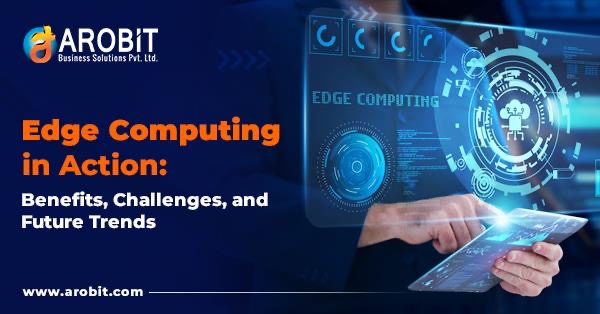
Edge computing has emerged as a disruptive technology that is taking cloud computing to the next level by changing how data is processed and consumed in today's fast-paced digital world. This blog post will discuss what edge computing is, the benefits and challenges of edge computing, and where it is going. In addition, we will answer some FAQs about edge computing to provide information for companies to understand its promise.
Edge computing has fundamentally changed how we use technology and is a key technology of today, as it provides access to faster processing and real-time insight from computation that occurs at the point of data collection. As we continue to rely on diverse IoT devices and AI-infused solutions, edge computing will continue to provide a positive impact on business efficiencies and user experiences through real-time data access.
What is Edge Computing?
Edge computing is a distributed model where data processing and storage occur near the source of the data versus only using cloud infrastructure. Unlike cloud computing, engaging centralized data centers and edge technology eliminates latency by utilizing data processing as close to the source as possible.
Key differences between edge computing and cloud computing include:
- Location: Edge computing processes data near or at the source, while cloud computing centralizes the data flow at a distant data center.
- Latency: Edge solutions yield faster data processing times than cloud computing solutions that rely on long-distance data processing.
- Bandwidth: Edge computing reduces bandwidth consumption by processing "raw" data on the edge and passing essential data to the cloud.
Advantages of Edge Computing
Edge computing offers many advantages for businesses across sectors:
- Decrease in latency: Edge technology reduces time, latency and use cases such as autonomous vehicles and industrial IoT need near real-time responses.
- Better data security: Sensitive data stays inside the local network, reducing the risk of a data breach and ensuring compliance with data regulations, such as GDPR & HIPAA.
- Operational efficiency: When insights come faster, businesses can improve their workflows, automate processes, and increase productivity.
- Cost: When processing is done locally, it saves costs associated with transmitting large volumes of data to centralized servers.
- Reliability: Edge computing is reliable in situations where internet connectivity is limited or unavailable.
Practical Examples
Edge computing is disrupting markets by allowing for innovative applications:
- Healthcare: Real-time analysis from medical sensors is creating better patient outcomes by identifying issues like sepsis or chronic conditions more quickly.
- Manufacturing: Automated quality control systems are utilizing edge AI to improve efficiency.
- Retail: Smart shelves and tailored customer experiences are backed by edge technology for quicker decisions.
Challenges and Solutions
Despite its advantages, edge computing presents challenges that need well-formed solutions.
- Security Concerns: The increase in endpoints creates vulnerabilities, which can be addressed by encryption protocols and maintaining updates to edge devices to resolve these vulnerabilities.
- Scalability Issues: Managing thousands of edge nodes can be a challenge. Organizations are developing tools to automate device maintenance and resource allocation.
- Infrastructure Management: Operational constraints such as troubleshooting take time and require imaginative designs involving multi-chipsets for more efficient repairs.
- System Mobility Constraints: Mobile edge devices experience difficulties when migrating tasks. Patented solutions optimize the health of a mobile task by distributing it across many servers so that there isn't an apparent issue.
Future of Edge Computing
The future of edge computing is bright, fueled by new technologies such as 5G, software-defined networking, and the integration of artificial intelligence (AI). The major trends are:
- Growth of Edge AI: By combining edge computing with artificial intelligence, decisions can be made more intelligently nearer to the device.
- Growth of IoT: As IoT devices increase in numbers, the call for localized processing will grow.
- Hybrid Cloud Models: The emergence of edge with traditional cloud will afford businesses to build flexible architectures.
- Sustainability: Energy-efficient edge devices can be utilized to lower carbon footprints.
FAQs
Q1: What is an example of edge computing?
A1. Edge computing can be illustrated by autonomous automobiles, which utilize edge technology to process their sensor stream information with local processing for decision-making in real-time navigation and do not rely on the latency of the cloud.
Q2: What are the benefits of edge computing?
A2. Immediate benefits include decreased latency, improved security, cost savings, increased reliability, and quicker decision-making in real-time.
Q3: Is edge computing the future?
A3. Yes, with the expeditious deployment of IoT and AI-based initiatives, Gartner predicts that by 2025, 75% of data generated by enterprises will be processed outside of the conventional cloud environment.
Conclusion
Edge computing is transforming industries through fast processing, enhanced security, and inexpensive operations. For software development companies that are interested in pursuing new solutions, edge computing combined with cloud computing can provide access to variables for growth. As challenges are met with tools and advanced architectures, the future holds severe impacts for edge computing applications across multiple industries. Businesses able to understand this shift will emerge on the outside of this revision of the digital landscape.



Comments
No comments yet. Be the first to share your thoughts!