





A prominent FMCG distributor in Mumbai faced a nightmare scenario: ₹1.8 crore worth of inventory had expired in their warehouse, while simultaneously, their promotional schemes were bleeding money due to duplicate claims and manual tracking errors. The finance team discovered that 23% of their scheme payouts were unverified, and sales teams were making commitments without checking real-time stock availability. This wasn't just an operational hiccup—it was a systemic failure costing the business millions annually.
This scenario is far more common than most FMCG leaders would like to admit. When inventory management and scheme execution operate in silos, the hidden costs compound quickly, eroding profit margins and competitive advantage.
The Real Cost of Disconnected Systems
Inventory Management Challenges in FMCG
Poor inventory management in FMCG goes beyond visible stockouts or overstock situations. The hidden costs include:
Wastage and Expiry Losses
- Perishable goods and products with short shelf lives create constant pressure.
- Without FEFO (First Expired, First Out) automation, expired stock accumulates.
- Average wastage costs can reach 5-8% of total inventory value annually.
Carrying Costs and Working Capital Lock-in
- Excess inventory ties up working capital that could fuel growth.
- Storage costs, insurance, and handling expenses add up significantly.
- Poor demand forecasting leads to overstocking of slow-moving SKUs
Stockout Losses and Market Share Erosion
- Out-of-stock situations drive customers to competitors
- Emergency replenishment orders increase procurement costs by 15-25%.
- Lost sales opportunities damage retailer relationships.
Scheme Management Chaos
FMCG companies allocate 15-20% of their revenue to trade promotions and schemes, yet many struggle with:
Manual Tracking and Reconciliation Nightmares
- Spreadsheet-based scheme tracking creates data silos across teams
- Sales teams lack real-time visibility into scheme budgets and utilization.
- Month-end reconciliation takes weeks, delaying strategic decisions.
Scheme Leakage and Fraud
- Duplicate claims go undetected without automated validation.
- Distributors claim benefits on stock that was never sold.
- Unverified scheme payouts can account for 12-18% of total scheme budgets.
Disconnected Planning
- Supply chain teams remain unaware of upcoming promotional demands.
- Inventory planning doesn't account for scheme-driven demand spikes.
- Result: Either stockouts during promotions or excess inventory post-campaign
How Integrated FMCG ERP Software Transforms Operations
Modern FMCG software solutions address these challenges through unified platforms that connect inventory management with scheme execution. Here's how comprehensive FMCG software development creates a measurable impact:
Real-Time Inventory Visibility
Automated Stock Tracking
- Live updates across warehouses, distribution centers, and retail points
- FEFO/FIFO automation ensures optimal stock rotation
- Expiry alerts prevent wastage before it happens
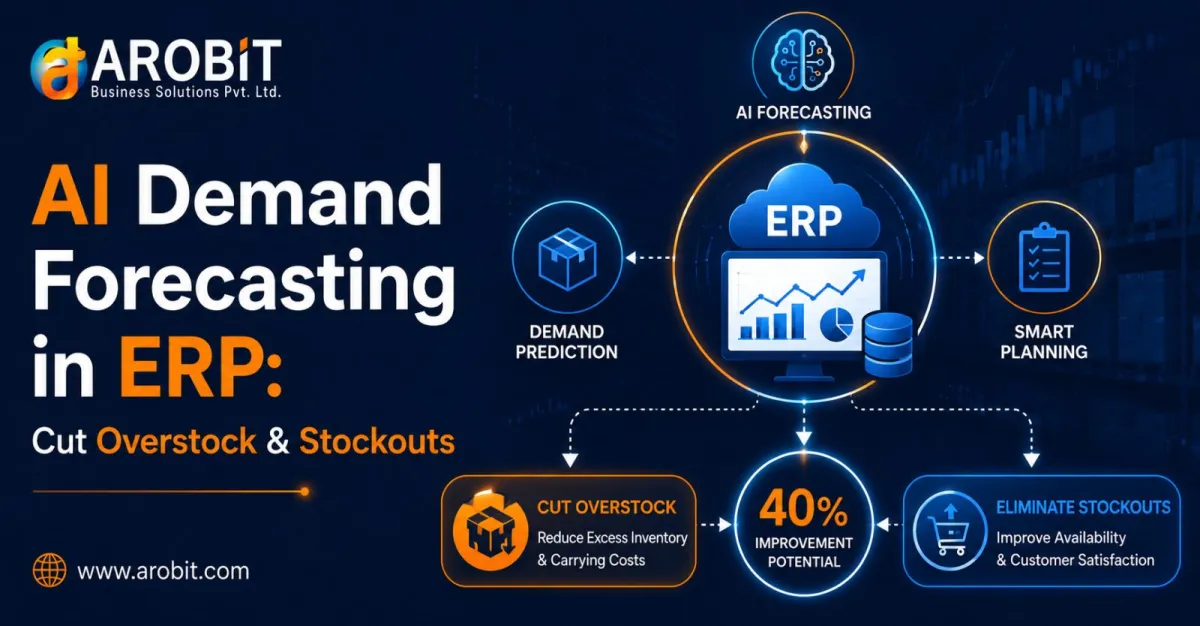
Demand Forecasting with AI
- Historical sales data combined with scheme calendars
- Predictive analytics identify demand patterns
- Automatic reorder points based on lead times and consumption rates
Intelligent Scheme Management
End-to-End Scheme Lifecycle Management
- Digital scheme creation with approval workflows
- Automatic eligibility checks against sales data
- Real-time scheme utilization tracking for sales teams
Fraud Prevention and Validation
- Automated claim verification against actual secondary sales
- Duplicate claim detection across distributors
- GPS-tagged proof of delivery integration
The Power of Integration
When inventory and scheme management converge in an ERP system, FMCG companies unlock powerful synergies:
Coordinated Planning
- Scheme calendars automatically trigger inventory replenishment.
- Supply chain visibility prevents promotional stockouts
- Sales teams see real-time stock availability before making commitments.
Financial Accuracy
- Scheme accruals are calculated automatically based on actual dispatches
- Inventory valuation reflects scheme discounts accurately.
- CFOs get the real-time P&L impact of running promotions.
Data-Driven Decision Making
- Which schemes deliver the best ROI per product category?
- How do promotional spikes impact inventory carrying costs?
- What's the optimal scheme duration to maximize sell-through without excess stock?
Quantifiable Results: What FMCG Leaders Achieve
Companies implementing integrated FMCG ERP software report:
- 35-40% reduction in inventory wastage and expiry losses
- 20-25% improvement in working capital efficiency
- 15-18% decrease in scheme leakage and fraudulent claims
- 30% faster month-end reconciliation and reporting
- 95%+ scheme claim accuracy through automated validation
One mid-sized FMCG distributor recovered ₹47 lakhs annually by preventing duplicate scheme claims alone, while reducing inventory carrying costs by 22% through better demand planning.
Strategic Takeaway: From Cost Center to Competitive Advantage
The question isn't whether to invest in integrated FMCG software solutions, but how quickly you can implement them. Every quarter of delay represents continued revenue leakage, preventable wastage, and missed opportunities to optimize working capital.
At Arobit, we've spent over 13 years developing industry-specific ERP solutions for FMCG distributors and manufacturers. Our domain expertise in FMCG software development helps businesses transform operational chaos into a strategic advantage. From grain procurement in wheat mills to complex multi-tier distribution networks, we build solutions that address real industry challenges.
The hidden costs of poor inventory and scheme management are substantial, but they're also completely preventable. The technology exists. The ROI is proven. The only question is, when will you stop funding inefficiency and start building a competitive advantage?
Frequently Asked Questions
Q1. What is inventory management in FMCG, and why is it critical?
Inventory management in FMCG involves tracking, controlling, and optimizing stock levels across the supply chain—from manufacturing to distribution to retail. It's critical because FMCG products often have short shelf lives, high turnover rates, and slim profit margins. Poor inventory management leads to wastage through expiry, stockouts that damage retailer relationships, and excess working capital lock-in that constrains business growth.
Q2. How does FMCG ERP software prevent scheme leakage and fraud?
FMCG ERP software prevents scheme leakage through automated validation mechanisms. The system cross-verifies claims against actual secondary sales data, detects duplicate claims across different distributors, and flags anomalies in claim patterns. GPS-tagged delivery proofs and digital documentation create audit trails that manual systems cannot provide. This typically reduces fraudulent or duplicate claims by 15-18%.
Q3. What ROI can companies expect from implementing FMCG ERP software?
Most FMCG companies see ROI within 12-18 months of implementation. Typical benefits include a 35-40% reduction in inventory wastage, a 20-25% improvement in working capital efficiency, a 15-18% decrease in scheme leakage, and 30% faster financial closing processes. The exact ROI varies based on company size, distribution complexity, and current system maturity.
Q4. Can FMCG ERP integrate with existing accounting and distribution systems?
Yes, modern FMCG ERP solutions are built with integration capabilities. They can connect with existing accounting software, distributor management systems, e-invoicing platforms, and even retailer POS systems through APIs. This ensures you don't have to replace your entire technology stack—the ERP acts as a unified layer that brings data together from multiple sources.
Q5. How long does it typically take to implement FMCG ERP software?
Implementation timelines vary based on business complexity, but a typical mid-sized FMCG distributor can go live within 3-6 months. This includes requirement gathering, customization, data migration, user training, and phased rollout. The key is working with experienced FMCG software development partners who understand industry-specific workflows and can anticipate implementation challenges before they arise.



Comments
No comments yet. Be the first to share your thoughts!