




The software development services market is expected to grow to approximately $1 trillion in 2025, with a compound annual growth rate (CAGR) of 11.7% from 2022 to 2025. This growth will be driven by increasing demand for custom software solutions tailored to specific business needs.
Most firms are now considering the use of technology to enhance productivity, improve customers' experiences, and innovate business operations. Collaborating with an appropriate software development company helps businesses deliver high-quality, customized software developed to meet business-specific needs.
It shall review the leading trends of 2025 for software development services, explaining the ways that businesses and developers may benefit.
Top Trends in Software Development Services
1. Artificial Intelligence and Machine Learning
Artificial Intelligence (AI) and Machine Learning (ML) are leading the software development space. By 2025, we will witness:
- AI-Driven Development Tools: GitHub Copilot and more such tools will be developed. This will lead to real-time code suggestions and auto-completion capabilities. It will make the process much faster while still providing quality code.
- Intelligent Code Review: Through AI, code reviews would be entirely automated. Bugs would be detected and optimizations recommended. Developers will focus on complex problem-solving.
Machine learning applications will also grow.
- Automation of Customer Services: AI chatbots and virtual assistants will increase efficiency in looking after customer inquiries.
- Improved Personalization: Businesses will leverage the ML algorithms to give personalized experiences, based on user behavior.
2. Generative AI Integration
Generative AI is going to change the way IT engineers work.
- Automated Documentation: This will enable automated documentation creation using generative AI tools that can save developers much time.
- Prototyping: They can produce prototypes with minimal input, thereby hastening the cycle of development.
The impact on collaboration will be significant:
- Real-Time Suggestions: Generative AI will provide suggestions during coding sessions, which will improve teamwork and close skill gaps.
3. Low-code and No-code development
Low-code and no-code platforms are democratizing software creation with the rise.
- Accessibility for Non-Developers: These platforms enable people without coding skills to create applications, and this has created innovation in almost all sectors.
- Predictions: By 2025, more than 70% of all new enterprise applications will be developed with low-code/no-code solutions.
This trend allows them to respond accordingly to market requirements without relying wholly on the core development teams of old.
4. DevSecOps Practice
Security should become an essential part of the software development lifecycle.
- Embedded Security Measures: DevSecOps practices ensure that security is prioritized from the outset, reducing vulnerabilities in the final product.
- Automated Testing Tools: Tools that test for vulnerabilities during development will become standard, promoting a culture where security is everyone's responsibility.
This shift towards a security-first approach is essential as cyber threats continue to evolve.
5. Cloud-Native and Edge Computing
Cloud-native development has become more popular.
- Synergy Between Cloud and Edge: Cloud computing with edge computing can speed up data processing nearer to the generation point.
- Benefits for IoT Applications: The other benefit is this trend particularly IoT applications when real-time processing of data is required.
Organizations will increasingly use cloud-native strategies to improve scalability and performance.
6. SaaS Innovations
Software as a Service (SaaS) continues to evolve:
AI-Focused Solutions: The proliferation of AI-driven SaaS applications is going to provide businesses with more advanced analytics and automation capabilities.
Micro-SaaS Models: Bigger companies will emerge with niche SaaS functionalities, attempting to capture small business needs.
Emphasis on security and customer success will be paramount as companies seek reliable SaaS partners.
7. Cybersecurity Improvements
As cyber threats become more sophisticated, cybersecurity measures in software development are critical:
- Proactive Security Measures: Threat modelling and secure coding practices would be adopted by the developers.
- AI-Powered Vulnerability Remediation: Tools that can automatically identify and remediate vulnerabilities in code will become a must for maintaining secure applications.
Organizations must prioritize cybersecurity to protect sensitive data and maintain customer trust.
8. New Technologies
Several emerging technologies are likely to influence software development practices soon.
- IoT Integration: The increasing connectivity of devices requires innovative software solutions that can handle vast amounts of data.
- Blockchain Applications: With a focus on business transparency and security in transactions, blockchain technology is going to become a significant software solution.
These technologies thus unlock new opportunities for application developers to develop innovative applications that meet very evolving business needs.
FAQs
Q1: What is the difference between IT services and software services?
A1: IT services cover a wide array of technology-related support functions, such as hardware maintenance, network management, and IT consulting. Software services are specifically focused on the design, development, deployment, and maintenance of software applications.
Q2: What is a software services company?
A2: A software services firm specializes in the provision of customized software solutions aimed at meeting a particular client's needs. These companies usually provide such services as application development, system integration, and support.
Q3: What is software service?
A3: Software services are usually the creation of a new application or the modification of existing ones to solve certain business problems. This ranges from initial consultation and design through development, testing, deployment, and maintenance.
Conclusion
As we push into 2025, businesses looking to use technology will need to understand these important emerging trends in software development services. From productivity-enhancing AI-driven tools to the democratization of application creation with low-code platforms, these trends promise vast improvements in how we develop software for the future. Adopting these changes not only makes companies better positioned to be successful but also enables developers to focus on strategic roles that are driving innovation. By staying informed about these trends, businesses can make informed decisions about their software development strategies.
Choose the Best Software Development Service for Your Business
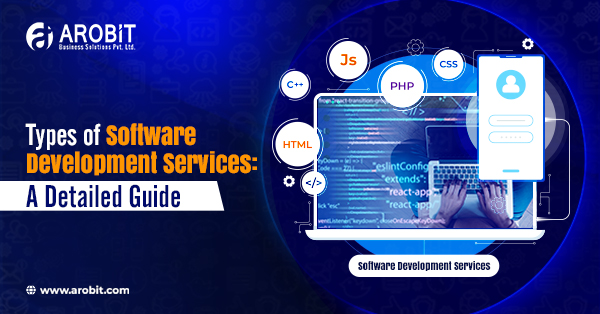
The right decision in software development begins with understanding the options available. Before making a choice, learn the various types of software development services. These include custom software solutions. Partner with a reliable software development company today and get the best solution for your business!



Comments
No comments yet. Be the first to share your thoughts!