





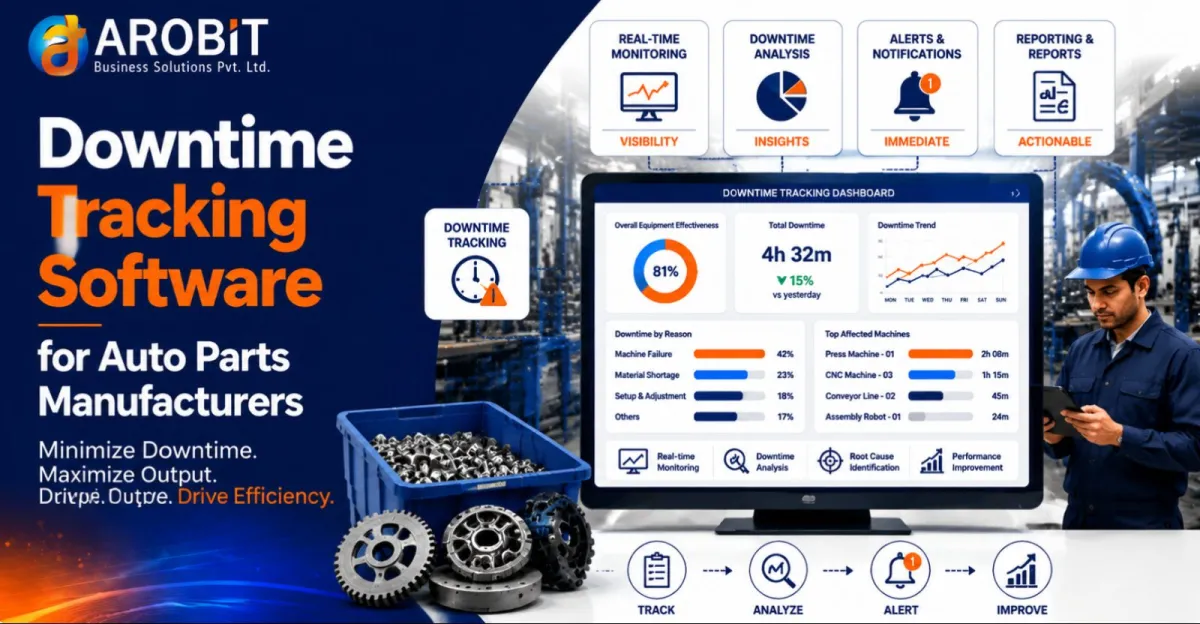
Every minute of unplanned downtime on an automotive production line affects more than machine output. It can delay customer deliveries, increase overtime costs, reduce equipment utilization, and disrupt downstream manufacturing processes. For auto parts manufacturers supplying OEMs or Tier-1 vendors, maintaining consistent production schedules is essential to meeting contractual commitments and quality expectations.
Many manufacturers still depend on manual production logs or end-of-shift reports to understand why production stopped. By the time downtime is analyzed, the opportunity to prevent further disruption has often passed. Limited visibility into machine performance, work orders, and production progress also makes it difficult to identify recurring issues that reduce overall manufacturing efficiency.
This is where downtime tracking software for auto parts manufacturers plays an important role. Instead of relying on delayed reporting, manufacturers can monitor production activities, machine availability, and line performance in real time. This enables production teams to respond quickly to operational issues and improve manufacturing efficiency through accurate data rather than assumptions.
Why Downtime Matters in Automotive Manufacturing
Automotive manufacturing operates on tightly coordinated production schedules. A machine stoppage in one production line can affect multiple downstream processes, resulting in delayed assembly, increased idle time, and missed delivery deadlines.
Downtime is not limited to equipment failure. Common causes include:
Machine breakdowns
Tool changeovers
Material shortages
Operator availability
Quality inspections
Power interruptions
Scheduled maintenance
Without reliable tracking, manufacturers often know that production has slowed but lack clear information about the root cause.
A well-designed downtime tracking software for auto parts manufacturers records production interruptions automatically, helping manufacturing teams understand when downtime occurred, how long it lasted, and why production stopped.
For businesses evaluating Automotive Manufacturing IT Services, downtime visibility should be a priority because accurate production data supports better planning, maintenance, and operational decision-making.
Improving Production Visibility Across the Shop Floor
Production managers make better decisions when they have access to current operational information.
Manual reporting methods often provide production updates only after a shift has finished. This limits the ability to respond quickly when production falls behind schedule.
A modern production monitoring system for auto parts manufacturers provides centralized visibility into manufacturing operations by tracking:
Active work orders
Machine availability
Production output
Material consumption
Work-in-progress inventory
Production targets
Shift performance
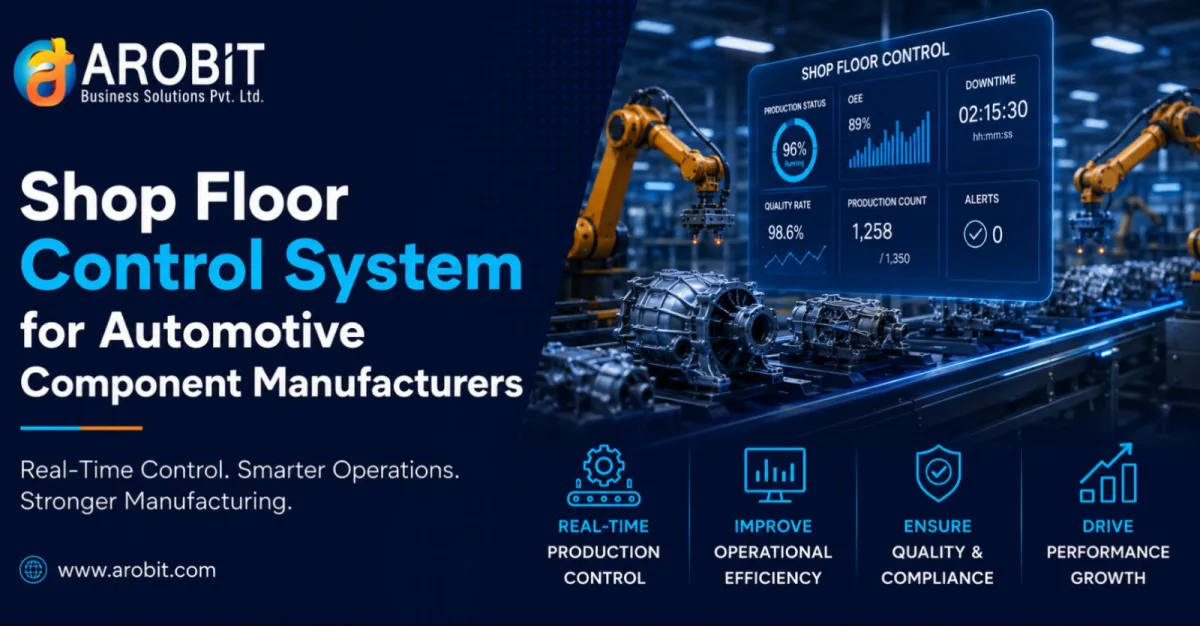
Combined with shop floor visibility software, production supervisors can monitor multiple manufacturing lines from a single dashboard instead of collecting updates from different departments.
This visibility allows manufacturing teams to identify bottlenecks while production is still in progress rather than after production targets have already been missed.
Monitoring Machine Downtime More Effectively
Understanding downtime requires more than recording when a machine stops.
Effective machine downtime tracking software categorizes production interruptions so manufacturers can identify recurring operational problems.
Typical downtime categories include:
Mechanical failure
Electrical issues
Preventive maintenance
Material shortages
Quality-related stoppages
Setup and changeover activities
Operator-related delays
Instead of manually documenting these events, the software records downtime automatically and stores historical production information for future analysis.
Manufacturers can then compare downtime trends across production lines, machines, shifts, and facilities to determine where operational improvements will have the greatest impact.
For organizations investing in Custom Automotive Software Development, integrating downtime monitoring with production scheduling and maintenance planning helps create a more connected manufacturing environment.
Using Real-Time Production Tracking to Respond Faster
Manufacturing conditions change throughout the day. Equipment failures, material shortages, and production delays require immediate attention rather than end-of-shift analysis.
A real-time production tracking system provides continuous updates on production progress, allowing supervisors to monitor manufacturing performance as work orders move through the shop floor.
Typical production information includes:
Completed production quantities
Remaining work orders
Machine operating status
Current production rate
Shift progress
Line utilization
Instead of waiting for production reports, supervisors can identify delays early and coordinate corrective actions before they affect customer delivery schedules.
For manufacturers implementing a line efficiency tracking system, combining real-time production monitoring with downtime analysis creates a stronger foundation for improving operational performance across the entire manufacturing process.
Measuring OEE and Improving Line Efficiency
Reducing downtime is only one part of improving manufacturing performance. Manufacturers also need to understand how efficiently each production line operates throughout the day.
A line efficiency tracking system helps production managers compare planned output with actual performance while identifying losses caused by machine stoppages, slow production rates, or quality issues.
Many manufacturers use OEE tracking software for automotive factories to evaluate Overall Equipment Effectiveness (OEE), which combines three key production measurements:
Availability – How much scheduled production time the machine was actually running.
Performance – Whether the machine operated at the expected production speed.
Quality – The percentage of components meeting quality standards without rework.
Rather than relying on isolated production reports, manufacturers can use these metrics to identify recurring efficiency losses and prioritize improvement initiatives.
Manufacturing Dashboards That Support Faster Decisions
Production information becomes more valuable when it is presented in a format that supports immediate action.
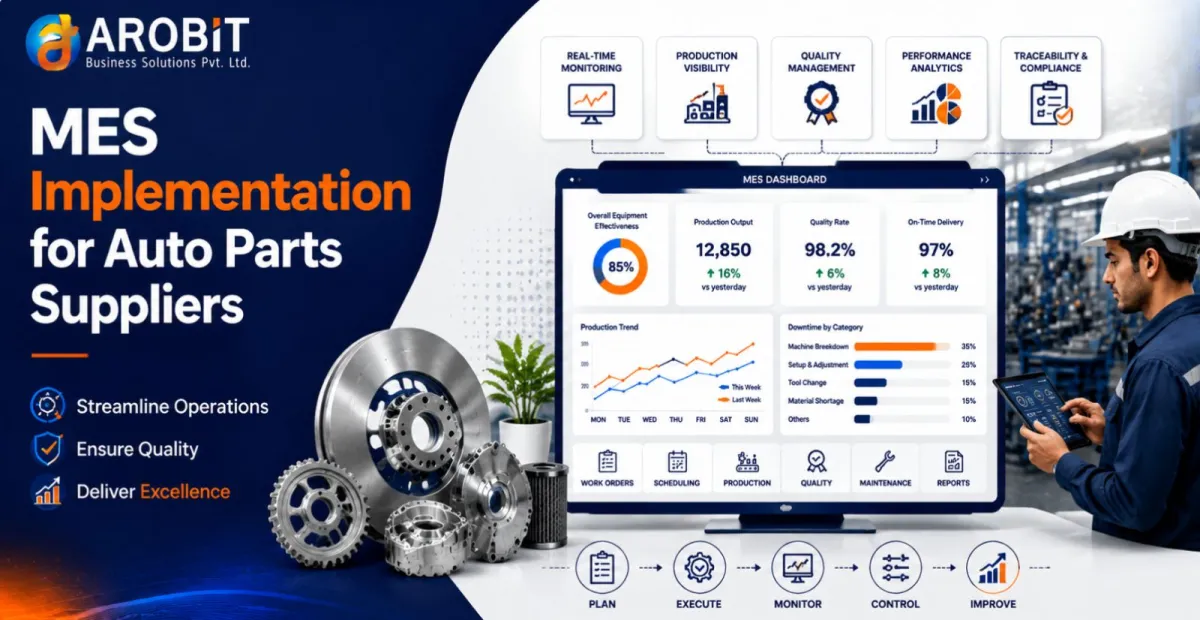
A centralized factory performance dashboard allows supervisors and production managers to monitor manufacturing activities throughout the shift instead of waiting for end-of-day reports.
Typical dashboard metrics include:
Machine utilization
Downtime by reason
Shift-wise production output
OEE trends
Active work orders
Production target versus actual
Rejection and rework rates
Material availability
When integrated with manufacturing line monitoring software, these dashboards provide a comprehensive view of production performance across multiple machines and manufacturing lines.
Managers can identify developing issues early and allocate maintenance, production, or quality resources before delays begin affecting delivery commitments.
Tracking Work Orders and Production Delays
Production planning depends on accurate execution.
A work order tracking software for manufacturers solution enables supervisors to monitor every production order from release to completion. Instead of manually updating production status, work orders progress automatically as manufacturing activities are completed.
Combined with production delay tracking software, manufacturers can identify where production schedules deviate from planned timelines.
For example, a delayed work order may immediately reveal:
Machine unavailability
Material shortages
Quality inspection delays
Operator constraints
Maintenance requirements
This visibility enables production planners to adjust schedules proactively rather than discovering delays after customer delivery dates have already been affected.
For organizations implementing Automotive Manufacturing IT Services, connecting work order management, downtime tracking, production monitoring, and reporting creates a more coordinated manufacturing environment.
Choosing the Right Downtime Tracking Solution
Selecting manufacturing software requires understanding both current production requirements and future operational goals.
Before selecting a solution, manufacturers should consider:
Can downtime be categorized by machine and production line?
Does the software support real-time production monitoring?
Can dashboards be customized for different departments?
Does it integrate with existing ERP or MES systems?
Can historical production trends be analyzed?
Is the solution scalable across multiple plants?
What implementation and support services are provided?
Businesses evaluating Custom Automotive Software Development should also determine whether the software can be configured around their existing manufacturing workflow rather than forcing standardized production processes.
Conclusion
Improving manufacturing efficiency requires more than reducing machine stoppages. Manufacturers need complete visibility into production activities, work orders, machine utilization, and operational performance throughout the production cycle.
A well-designed downtime tracking software for auto parts manufacturers helps organizations identify recurring production interruptions, monitor manufacturing performance in real time, and improve line efficiency through accurate operational data.
When integrated with production monitoring, work order management, OEE analysis, and centralized reporting, manufacturers gain better control over production planning while improving coordination between production, maintenance, quality, and warehouse teams.
Instead of relying on delayed production reports, manufacturers can make timely operational decisions based on current manufacturing conditions, helping improve productivity and support long-term manufacturing performance.
Frequently Asked Questions
1. What is downtime tracking software for auto parts manufacturers?
Downtime tracking software for auto parts manufacturers records machine stoppages, production interruptions, downtime reasons, and manufacturing performance to help organizations reduce operational losses and improve production efficiency.
2. How does machine downtime tracking software improve manufacturing?
Machine downtime tracking software automatically records production interruptions, allowing manufacturers to analyze recurring issues, optimize maintenance activities, and reduce avoidable production losses.
3. Why is OEE important for automotive manufacturing?
OEE tracking software for automotive factories measures equipment availability, production performance, and product quality, helping manufacturers identify opportunities to improve manufacturing efficiency.
4. What information should a factory performance dashboard provide?
A factory performance dashboard should display production output, downtime, machine utilization, OEE, work order status, production targets, quality metrics, and material availability in real time.
5. What should manufacturers consider before selecting downtime tracking software?
Manufacturers should evaluate production monitoring capabilities, reporting, ERP integration, dashboard customization, scalability, implementation support, and the software's ability to align with existing manufacturing workflows.








Comments
No comments yet. Be the first to share your thoughts!