




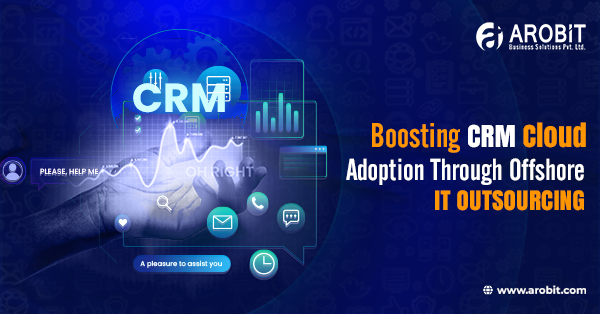
In the last few years, customer relationship management (CRM) systems have become a necessity for businesses that want to improve customer interaction and increase sales. The integration of cloud computing into CRM solutions has changed the way organizations manage customer data, making it flexible, scalable, and cost-effective. By 2025, the global cloud CRM market is projected to reach an impressive $100 billion, driven by a compound annual growth rate (CAGR) of 14% between 2020 and 2025. This rapid growth highlights the rising significance of cloud-based CRM solutions in today's business landscape.
Offshore IT outsourcing, on the other hand, has come out as a strategic approach through which companies can expedite the implementation of cloud technologies. Organizations can streamline the implementation process of CRM using external resources and expertise. This paper elaborates on how offshore IT outsourcing may enhance the adoption of CRM clouds for organizations while highlighting their advantages.
Understanding CRM in Cloud Computing
Definition and Role of CRM
CRM stands for the technologies that assist businesses in handling customer relationships through organizing and analyzing customer interactions and data in the whole lifecycle. The management improves customer service relationships, increases customer retention, and contributes to sales growth.
Overview of Cloud Computing in CRM
Cloud computing hosts the CRM systems on remote servers other than on-premises infrastructures. This model offers a number of advantages.
- Accessibility: The users can access the CRM data from anywhere with an internet connection.
- Scalability: Businesses can easily scale their CRM solutions according to demand.
- Cost Benefits: It reduces the need for significant upfront investments in hardware and maintenance.
Recent trends indicate that more organizations are shifting to cloud-based CRM systems because of these benefits. For example, a study revealed that 70% of businesses reported improved customer satisfaction after adopting cloud CRM solutions.
Role of Offshore IT Outsourcing in Technology Adoption
Definition of Offshore IT Outsourcing
Offshore IT outsourcing is the contracting of third-party service providers in other countries to take care of different technology functions.
This approach has several benefits:
- Cost Effectiveness: Leveraging cheap labour.
- Technical Expertise: Offshore teams are usually well-exposed to cloud technologies.
Importance of Outsourcing in Technology Adoption
Outsourcing is critical in promoting speed in adopting new technology. Organizations with offshore teams can quickly source expertise in the new technology. Similarly, technology consulting firms help an organization cut the complexities of a technological change to the desired business intent.
How Offshore IT Outsourcing Accelerates CRM Adoption
Offshore IT outsourcing is the most significant driver in enhancing the adoption of cloud-based CRM systems through a variety of key factors.
Cost Efficiency
Offshore outsourcing cuts down the implementation and maintenance costs of cloud-based CRM systems. Companies can save up to 40% on operational expenses by utilizing offshore teams.
Expertise and Software Quality Attributes
Offshore teams primarily focus on the critical software quality attributes during CRM implementation, which include scalability, reliability, and security. Their specialized skills ensure that the systems are robust and meet industry standards.
Speed and Agility
Leveraging specialized offshore talent will allow for quicker deployment of CRM systems. Efficient workflows enable faster project completion and help businesses respond quickly to market changes.
Scalability and Flexibility
Offshore partners offer scalable solutions that meet dynamic business needs. As a business grows or experiences dips in demand, these partners will be able to scale their resources accordingly without much delay and cost.
Case Studies or Real-world Examples
Many organizations have implemented offshore IT outsourcing successfully to shift to cloud-based CRM:
- Success Story for E-Commerce Platform
A US e-commerce retailer engaged an offshore software development company to develop a SaaS-based platform for inventory management. They utilized AWS for their infrastructure and implemented microservices architecture. As a result, they could reduce their operating expense by 40% with improved customer satisfaction.
- Implementation of AI-Driven Analytics
A global company hired an offshore team to develop an AI-based analytics platform integrated with its cloud-based CRM system. These teams, therefore, ended up delivering better data insights as well as a more personalized experience of the customer.
These cases showcase how partnerships with offshore teams, when done correctly, could lead to tangible results, such as cost savings as well as better software quality attributes.
Offshore IT outsourcing to overcome the challenges in adopting CRM
While offshore IT outsourcing presents numerous advantages, challenges related to communication gaps, concerns about data privacy, and differing time zones may arise. To overcome these challenges:
- Communication Strategies: Implementing robust communication tools ensures seamless collaboration between teams.
- Data Privacy Measures: Using outsourcing partners that are under strict data protection regulations is a must.
- Time Zone Management: Overlapping working hours can also establish one form of mitigation to time zone-related problems.
Overcoming barriers effectively requires one to choose reputable outsourcing partners.
FAQs
Q1: What are the key software quality attributes to consider in CRM in cloud computing?
A1: The key software quality attributes to consider in CRM in cloud computing are:
- Scalability: It ensures that the system can handle business growth.
- Security: It safeguards sensitive customer data.
- Reliability: It guarantees uninterrupted access and performance.
Q2: How do software consulting companies assist with offshore IT outsourcing?
A2: Software consulting companies provide expertise in technology selection, system integration, and strategic planning while keeping the offshore team aligned with the business.
Q3: What is the role of software consulting services in CRM adoption?
A3: Software consulting services customize cloud-based CRM solutions to meet business requirements while addressing challenges related to compatibility.
Q4: How does offshore IT outsourcing impact the quality of software attributes in CRM systems?
A4: Offshore teams have unique knowledge that allows for the secure, scalable, and efficient development of the platform with round-the-clock cycles and high productivity.
Q5: What are the ways construction CRM can benefit from offshore IT outsourcing?
A5: Offshore teams assist in adapting construction-specific CRMs that can help in the effective management of project workflows and interactions with clients at cost.
Q6: What is the best practice for selecting offshore IT outsourcing partners?
A6: Look for vendors with proven CRM and cloud-computing experience who give high priority to security and have strong track records.
Conclusion
In conclusion, offshore IT outsourcing works as a great facilitator in accelerating the adoption of cloud-based CRM systems. The availability of external expertise enhances the quality attributes of software and produces considerable cost efficiency. Through this transition, businesses are going to find significant use in partnering with well-reputed software consulting companies for implementing projects tailored to unique business needs. Adopting offshore outsourcing not only helps to make processes streamlined but also better equips companies to make sustainable growth in a more and more competitive landscape.







Comments
No comments yet. Be the first to share your thoughts!