




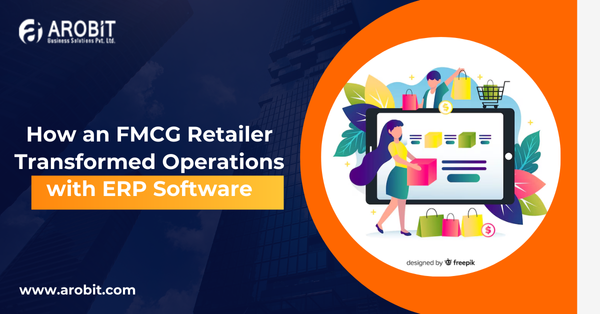
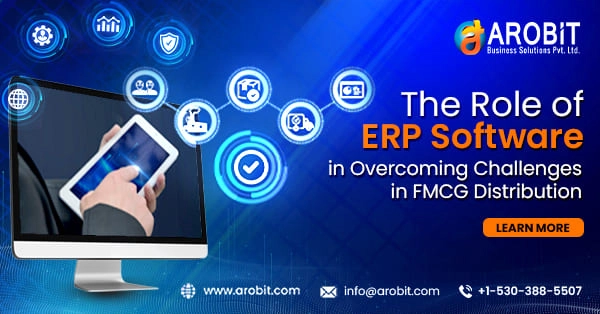
The FMCG industry is expected to register a CAGR of 5.3% by 2025, and retailers are under mounting pressure to streamline operations. According to a recent study, 72% of FMCG companies have poor inventory management, resulting in missed sales and inefficiencies. An FMCG retailer used bespoke ERP software to counter these challenges, automating operations and enhancing customer service.
Challenges Faced
The firm sought to keep prices competitive while managing a high volume of products. The firm, however, faced various challenges, including:
- Inventory Management Problems: Trouble with tracing stock in several warehouses.
- Order Processing Inefficiencies: Inefficiencies in the collection and processing of orders.
- Customer Relationship Management (CRM) Problem: Absence of a systematic way of managing customer preferences.
- Sales Tracking Issues: No centralized reporting environment for sales performance.
- Geographical Salesperson Management: Ineffective allocation of salespeople to customers.
These challenges led to lost sales, lack of communication, and operating inefficiencies.
The Solution
A Complete ERP Software To counter these inefficiencies, the company implemented customized ERP software meant for FMCG operations. The solution addressed the following crucial areas:
- Customized App: Allowed efficient order collection by the salespeople and enabled customers in remote locations to order on their own.
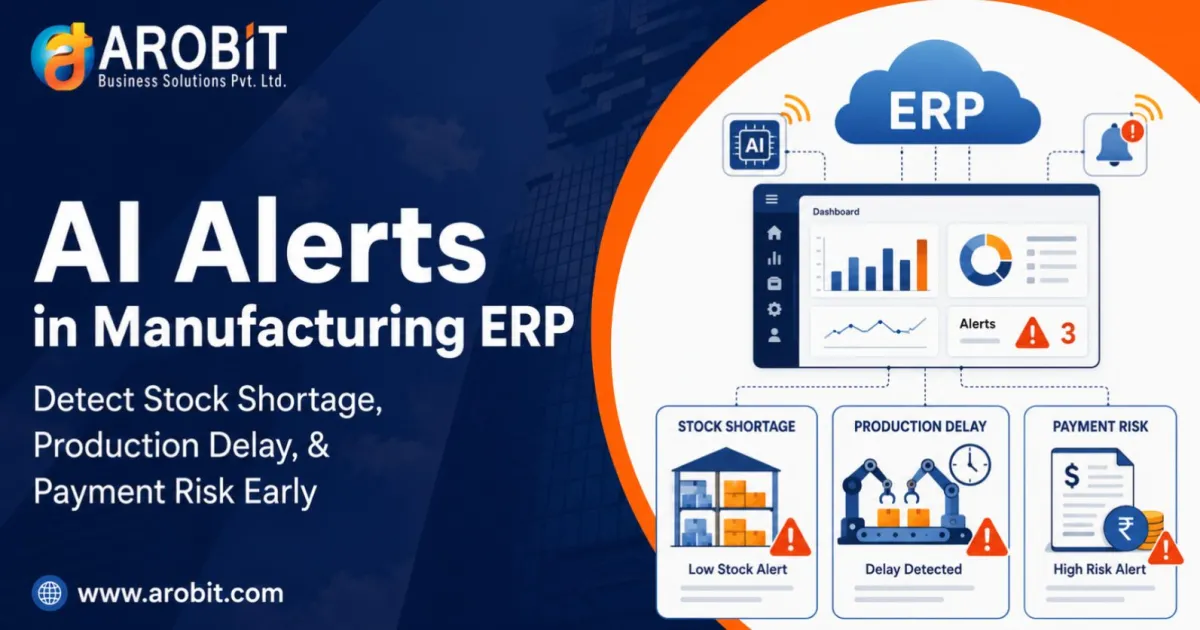
- Inventory Management: Automated inventory monitoring across various warehouses, with real-time inventory updates and low-stock warnings.
- Order Processing: Offered a trouble-free platform for salespeople to receive and process orders, minimizing human errors.
- CRM Integration: Monitored order history and customer preferences, enabling targeted promotions and customized pricing policies.
- Sales Tracking and Reporting: Provided real-time sales reports, supporting fact-based decision-making.
- Warehouse Management: Tracked product movement between locations to avoid stockouts and overstocking.
- Salesperson Management: Enabled admins to allocate salespersons to customers in terms of geographic zones for better service.
How ERP Software Works
The ERP solution streamlined the business operations through effective workflow:
- Salesperson Onboarding: Admins add and assign salespersons to customers by region.
- Customer Management: Customers are classified as B2B or B2C with customized price structures.
- Order Processing: Orders are gathered electronically, with real-time inventory updating.
- Inventory Management: Stock monitoring within warehouses is automated with low stock alerts in real-time.
- Sales Reporting: Analytics-based insights enable improved forecasting and price management.
- Customer Engagement: CRM functionalities enable monitoring of order history and preferences to offer customized deals.
Results and Impact
The ERP roll-out reengineered the FMCG retailer's business:
- 30% efficiency in order processing.
- 25% stockout reduction as a result of real-time inventory monitoring.
- 40% increase in customer satisfaction due to personalized service.
- 20% sales growth as the business spread to outlying areas.
Conclusion
With the ERP software, the FMCG retailer maximized inventory, automated sales, and enhanced customer relationships. Using automation and real-time reporting, the company improved its market position and increased sales growth. In an industry where efficiency is paramount, an ERP solution is not merely an improvement—it's a necessity. Arobit played a crucial role in delivering this transformation, ensuring a seamless and efficient ERP implementation.




Comments
No comments yet. Be the first to share your thoughts!