




Manufacturing companies in India are increasingly investing in ERP systems to improve operational visibility, streamline production processes, manage inventory more effectively, and support business growth. However, choosing the right ERP solution remains a significant challenge.
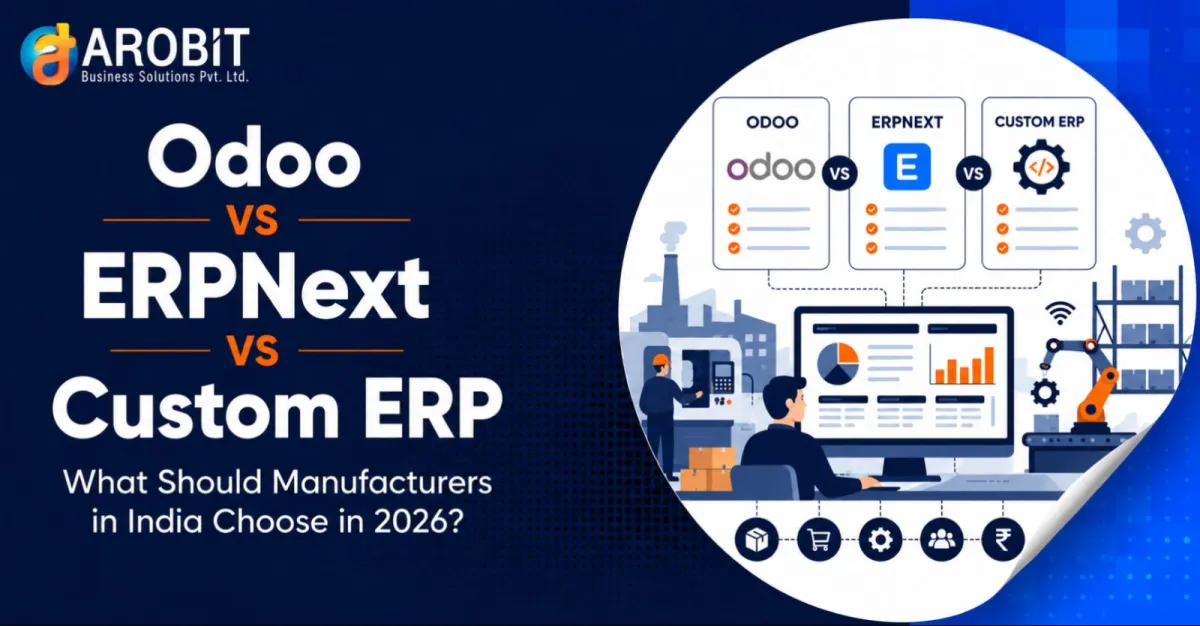
Many decision-makers find themselves comparing Odoo vs ERPNext vs custom ERP solutions before making an investment. Each option offers distinct advantages, limitations, and implementation considerations.
The right choice depends on factors such as business size, manufacturing complexity, operational requirements, budget, scalability expectations, and industry-specific processes.
This article explores the key differences between Odoo vs ERPNext vs custom ERP solutions and helps manufacturers determine which approach best aligns with their business goals in 2026.
Why ERP Selection Matters for Manufacturing Businesses
Manufacturing operations involve multiple interconnected functions, including:
Production planning
Inventory management
Procurement
Warehouse operations
Quality control
Sales management
Financial reporting
When these processes operate through spreadsheets or disconnected systems, businesses often experience:
Inventory discrepancies
Production delays
Limited reporting capabilities
Manual data duplication
Poor cross-department visibility
An ERP system provides a centralized platform that connects operational and financial data, helping organizations improve efficiency and decision-making.
The challenge is selecting an ERP solution that fits current requirements while supporting future growth.
Understanding Odoo ERP
Odoo is an open-source ERP platform known for its modular structure and broad range of business applications.
Organizations can implement only the modules they require, including:
Inventory Management
Manufacturing
Procurement
CRM
Accounting
Sales
Human Resources
Advantages of Odoo
Flexible modular architecture
Large ecosystem of applications
User-friendly interface
Strong customization capabilities
Suitable for various industries
Limitations of Odoo
Advanced customization may increase implementation costs
Some modules may require additional configuration
Complex manufacturing processes often need further development
For manufacturers seeking flexibility and scalability, Odoo can be an attractive option.
Understanding ERPNext
ERPNext is another open-source ERP platform widely adopted by small and medium-sized businesses.
It includes built-in functionality for:
Manufacturing
Inventory Management
Accounting
Procurement
Project Management
Human Resources
Unlike some ERP solutions that rely heavily on third-party modules, ERPNext provides many features within its standard package.
Advantages of ERPNext
Lower implementation costs
Open-source flexibility
Integrated manufacturing features
Simpler deployment for smaller organizations
Limitations of ERPNext
Smaller ecosystem compared to Odoo
Limited third-party application availability
Advanced manufacturing requirements may require customization
ERPNext is often suitable for growing MSMEs looking for a cost-effective ERP solution with core manufacturing capabilities.
What Is a Custom ERP?
A custom ERP is a solution designed specifically around an organization's processes rather than adapting business operations to fit predefined software workflows.
Instead of selecting modules from an existing platform, businesses define their exact requirements and build functionality around operational needs.
Custom ERP systems may include:
Production Planning
Inventory Management
Procurement Automation
Quality Assurance
Warehouse Management
Batch Traceability
Vendor Management
Custom Reporting
The system is designed to reflect how the business actually operates.
Odoo vs ERPNext vs Custom ERP: Key Differences
When evaluating Odoo vs ERPNext vs custom ERP, manufacturers should focus on business requirements rather than software popularity.
Factor | Odoo | ERPNext | Custom ERP |
Initial Investment | Moderate | Lower | Higher |
Deployment Speed | Moderate | Fast to Moderate | Longer |
Flexibility | High | Moderate | Very High |
Manufacturing Customization | High | Moderate | Unlimited |
Scalability | High | Moderate to High | High |
Third-Party Integrations | Extensive | Moderate | Fully Customizable |
Long-Term Adaptability | High | Moderate | Very High |
Each option serves different business needs and growth strategies.
When Odoo Is the Better Choice
Odoo can be an effective solution when organizations require:
Multiple business modules
Strong scalability
Integration flexibility
A large application ecosystem
Manufacturers planning significant growth often appreciate Odoo's modular architecture because additional functionality can be introduced as operational needs evolve.
Businesses with standard manufacturing workflows frequently find Odoo sufficient without extensive redevelopment.
When ERPNext Is the Better Choice
ERPNext is often a practical choice for:
Small manufacturing companies
Budget-conscious organizations
Businesses seeking rapid implementation
Companies with relatively straightforward operations
Many MSMEs benefit from ERPNext because it provides core manufacturing functionality without the complexity associated with larger ERP platforms.
Organizations seeking essential operational control without significant customization may find ERPNext to be a cost-effective solution.
When a Custom ERP Makes More Sense
Not all manufacturing companies fit into standard ERP frameworks.
Some businesses operate with:
Specialized production processes
Industry-specific compliance requirements
Unique approval workflows
Complex inventory structures
Custom reporting requirements
In such cases, forcing operations into predefined ERP processes may create inefficiencies.
A custom ERP enables businesses to:
Align software with existing workflows
Automate unique processes
Eliminate unnecessary features
Create specialized dashboards
Build industry-specific functionality
For manufacturers with highly specialized operations, custom solutions often provide greater long-term value.
Cost Considerations
Cost is one of the most important factors when comparing Odoo vs ERPNext vs custom ERP.
Odoo Costs
Costs typically include:
Licensing (depending on version)
Implementation
Customization
Training
Ongoing support
ERPNext Costs
Common expenses include:
Deployment
Customization
Training
Maintenance
Hosting
Custom ERP Costs
Custom ERP projects generally involve:
Business analysis
System design
Development
Testing
Deployment
Continuous enhancements
Although custom ERP systems may require higher initial investment, they can reduce operational inefficiencies and eliminate recurring expenses associated with unnecessary modules.
Factors Manufacturing Companies Should Evaluate
Before selecting a solution, decision-makers should assess several critical factors.
Operational Complexity
How unique are your manufacturing processes?
Future Growth Plans
Will the business expand locations, product lines, or production capacity?
Integration Requirements
Do existing systems need to connect with ERP software?
Reporting Requirements
Are standard reports sufficient, or are customized analytics necessary?
Regulatory Compliance
Do industry regulations require specialized functionality?
Answering these questions helps determine whether Odoo, ERPNext, or a custom ERP is the most suitable option.
The Role of the Right Technology Partner
The success of an ERP project depends not only on software selection but also on implementation expertise.
An experienced manufacturing software development company can evaluate business processes, identify operational challenges, and recommend the most appropriate solution based on actual requirements.
Whether implementing Odoo, ERPNext, or developing a custom ERP, proper planning significantly improves project outcomes.
Manufacturers should seek partners with experience in:
ERP implementation
Manufacturing operations
Workflow automation
System integration
Digital transformation
Odoo vs ERPNext vs Custom ERP: Which Option Is Best in 2026?
There is no universal answer to the Odoo vs ERPNext vs custom ERP debate.
Odoo offers flexibility and scalability through its extensive ecosystem. ERPNext provides a cost-effective solution for growing businesses seeking core ERP functionality. Custom ERP solutions deliver maximum alignment with unique manufacturing processes and operational requirements.
The best choice depends on the complexity of operations, long-term growth objectives, customization needs, and available budget.
For many manufacturers, the decision should begin with understanding operational challenges rather than evaluating software features alone.
Conclusion
Choosing between Odoo vs ERPNext vs custom ERP requires a careful evaluation of business goals, manufacturing workflows, scalability requirements, and operational complexity. While Odoo and ERPNext offer strong capabilities for many organizations, businesses with highly specialized processes may benefit from a tailored ERP solution designed around their operations.
Working with an experienced manufacturing software development company can help manufacturers assess their requirements and select the most appropriate technology approach. With extensive experience in manufacturing software, ERP development, workflow automation, and digital transformation, Arobit helps manufacturers build solutions that improve operational visibility, streamline processes, and support long-term business growth.
Frequently Asked Questions
1. Which is better for manufacturing companies, Odoo or ERPNext?
The answer depends on business requirements. Odoo offers a larger ecosystem and greater flexibility, while ERPNext is often more cost-effective for small and medium-sized manufacturers.
2. When should a company choose a custom ERP instead of Odoo or ERPNext?
A custom ERP is often appropriate when businesses have specialized workflows, industry-specific requirements, or operational processes that cannot be efficiently managed through standard ERP configurations.
3. Is a custom ERP more expensive than Odoo or ERPNext?
Initial implementation costs are typically higher for custom ERP solutions. However, long-term value depends on factors such as process efficiency, scalability, and the ability to support unique business requirements.


Comments
No comments yet. Be the first to share your thoughts!